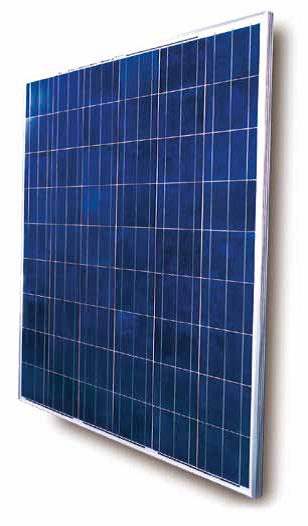
Every inch of that 9.9 kW home solar power system is used. Love it
Source: schottsolar.com
Panels: SCHOTT ASE 160
This is not in Melbourne, Australia.
The solar power blog in Melbourne, Australia.
Showing posts with label PV. Show all posts
Sunday, 25 July 2010
Maximize your roof space with Solar Power Panels
Monday, 28 June 2010
SunTech solar panels test vs SCHOTT solar panels test
The consumer products test foundation Öko Test in conjunction with Photon examined all major panels available on the biggest solar power market.
Here is the score:
1. SCHOTT test result: "very good"
2. SunTech test result: "insufficient", later revised to "good".
The panels examined were SunTech STP205-18/Ud and SCHOTT POLY 220
Key findings will be explained in the coming blog post.
The full test can be downloaded here. Not for free unfortunately, and in German.
SCHOTT POLY 220
SUNTECH STP205-18/Ud
Wednesday, 16 June 2010
How does the Feed in Tarrif work in Victoria?
Victoria is on a net feed-in tarrif.
That means, the energy that's generated by the solar power system is fed into the house first. Whatever is not used, is fed into the grid.
For example: My 2.8 kW solar power system generates on average around 11.2 kWh of electricity per day.
During the day, me and my partner are at work, i.e. appliances like our fridge are using only 1.5 kWh.
That means, I can feed back 9.8 kWh into the grid, every day.
My total earnings/savings are then:
9.8 kWh x $0.66 = $ 6.47 per day
+ 1.5 kWh x $0.19 = $ 0.29 per day
Makes a total income of $ 6.76 per day or $ 2,467 per year.
www.solarpowermargs.com
Labels:
Australia,
feed in tariff,
net,
PV,
Schott solar,
victoria
Monday, 14 June 2010
Schott Solar - Made in Germany
Just got my Schott Solar PV system installed by Sun Empire in Melbourne.
It's performing great. It's on a north facing roof with an angle of 30 degrees. Which is the optimal solar power angle in Melbourne, Australia.
On 13/6/ it generated around 3 kWh (kilowatt hours) of electricity. I was able to feed it back into the grid at the premium feed in tarrif of 66 cents per kWh. All the data is displayed on the KACO inverter (made in Germany). It shows me all the information I need.
In Victoria, we are rewarded with RECs (renewable energy certificates) or solar credits which makes a solar power system really affordable.
I will pay my system off within 5 years!!!
Subscribe to:
Posts (Atom)